
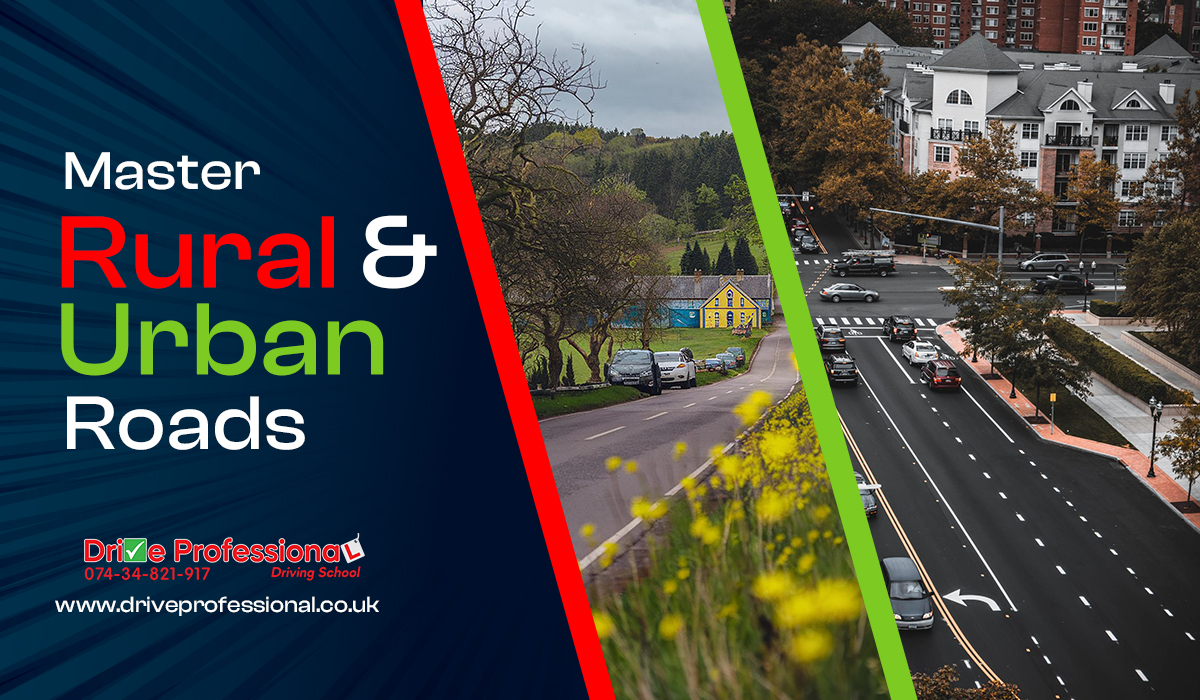
Do you know why many learner drivers struggle with city driving after practising on quiet country roads? The move from low-traffic rural lanes to busy urban streets requires quick changes in observation, speed control, and judgment. In the city of Oxford, drivers transition from narrow Cotswold roads to high-traffic routes, such as Cowley Road, where strict rule compliance and constant awareness are essential for maintaining a safe and steady traffic flow.
Developing the versatility to handle both environments is not just about passing a test; it is about ensuring long-term safety and security. Having access to Friendly Driving Instructors in Oxford can make this learning curve much smoother by providing the calm, local expertise needed to master these distinct road types effectively.
To make an informed decision at the end of the day, it is necessary to discuss the specific hazards of high-speed rural lanes, the complexities of urban pedestrian management, and the importance of adapting your speed and observation techniques to suit your immediate surroundings. Continue reading.
How Does Rural Road Geometry Impact the Safety Aspect?
Driving in the countryside often feels peaceful, but the statistics suggest these roads can be more dangerous than city streets due to higher speeds and unexpected hazards. Rural lanes in Oxfordshire are frequently narrow, with blind bends and hidden dips that require constant attention. Unlike urban areas, these roads may not have pavements, meaning you could encounter walkers, cyclists, or even livestock around any corner.
Visibility is often limited by high hedges or stone walls, which makes the ‘limit point’ technique essential. This involves adjusting your speed so you can always stop within the distance you can see to be clear. At night, the lack of street lighting adds another layer of difficulty. New drivers must learn when to use full beams and when to dip them to avoid dazzling others, all while scanning for the reflective eyes of wildlife.
What Are the Primary Challenges of Urban Driving?
Urban driving is characterized by high density and constant change. In a city environment, the sheer volume of road users—including buses, taxis, delivery vans, and e-scooters—creates a high-pressure atmosphere. You are constantly required to process information from traffic lights, complex roundabouts, and various road markings. Finding reputable Driving Schools in Oxford that specialise in city center navigation is vital for mastering the ‘Stop-Start’ nature of these journeys.
Pedestrian activity is the most unpredictable element of town driving. Areas near schools, shops, or University buildings require heightened awareness, as people may step into the road unexpectedly. Furthermore, urban areas often feature strict low-emission zones or one-way systems that can be confusing for the uninitiated. Mastering clutch control (or gear selection in an automatic) is crucial here to manage slow-moving traffic without stalling or becoming overly fatigued.
How Should Drivers Adapt Their Observation Techniques?
The key to safety is shifting your mental focus as per the trend of the environment. In a rural setting, your scan should be wide and deep, looking far ahead for signs of oncoming large vehicles or changes in road surface like mud or standing water. In an urban setting, your scan becomes much more localized and rapid. You must check mirrors frequently and be aware of ‘blind spots’ where cyclists might be filtering through traffic.
- Anticipation: Predicting the actions of others before they happen.
- Speed Management: Using the appropriate gear to maintain control.
- Space Cushioning: Keeping a safe distance in tight city gaps.
- Signage Awareness: Quickly interpreting local parking and turning restrictions.
Essential Safety Tips for Rural and Urban Driving
Adapting to both rural and urban roads is easier when you follow proven safety strategies. These tips help learners build confidence while managing real-world hazards effectively:
(1) Always Adjust Speed to Conditions
In rural areas, reduce speed on narrow lanes and sharp bends. In cities, maintain a speed that allows you to stop safely for pedestrians and sudden traffic changes.
(2) Maintain Safe Following Distances
Keep enough space between your car and the vehicle ahead. This is critical on fast rural roads and in congested urban traffic.
(3) Anticipate Hazards Early
Scan the road ahead for pedestrians, cyclists, animals, and sudden obstacles. Anticipation reduces reaction time in both environments.
(4) Use Mirrors and Signals Consistently
Frequent mirror checks and proper signalling are essential for lane changes, roundabouts, and junctions, especially in busy city streets.
(5) Stay Calm and Focused
Rural quiet can lull drivers into overconfidence, while city traffic can feel overwhelming. Maintain concentration and patience in all situations.
6 Things to Consider When Choosing the Best Driving School
Selecting the right driving school is a key step toward becoming a safe and confident driver. A well-established training provider not only helps you pass the driving test but also prepares you for real-world driving conditions. The following points highlight what to look for when making your choice.
(1) DVSA-Approved Instructors
Always ensure the company employs fully qualified, DVSA-approved instructors. This guarantees professional training and compliance with current driving standards.
(2) Local Area Knowledge
Instructors with strong knowledge of both city routes and nearby village roads can better prepare learners for varied driving environments and test routes.
(3) Modern, Dual-Controlled Vehicles
A reliable school should provide modern, well-maintained cars fitted with dual controls to ensure safety and comfort during lessons.
(4) Supportive Teaching Approach
Patient and encouraging instruction helps learners build confidence and progress at a comfortable pace, regardless of experience level.
(5) Flexible Scheduling
Lesson availability should suit your personal timetable, offering convenience alongside consistent learning.
(6) Proven Pass Rates
A high first-time pass rate reflects quality instruction and good value for your investment.
Considering these factors will help you choose a driving school that truly supports your learning journey.
The Final Thoughts: What You Need to Know
Mastering both rural lanes and urban junctions is a vital step toward becoming a truly competent motorist. At Drive Professional Driving School, the whole team specialises in providing the high-quality, patient instruction required to navigate these diverse environments with total confidence.
Their friendliest Driving Instructors in Oxford are dedicated to your success, offering tailored lessons that focus on safety and real-world skills. Whether you prefer manual or automatic lessons, they can help you pass your test and drive safely for life.
Contact their professionals to do that, and also explore their courses, conveniently designed for you.
No Responses