
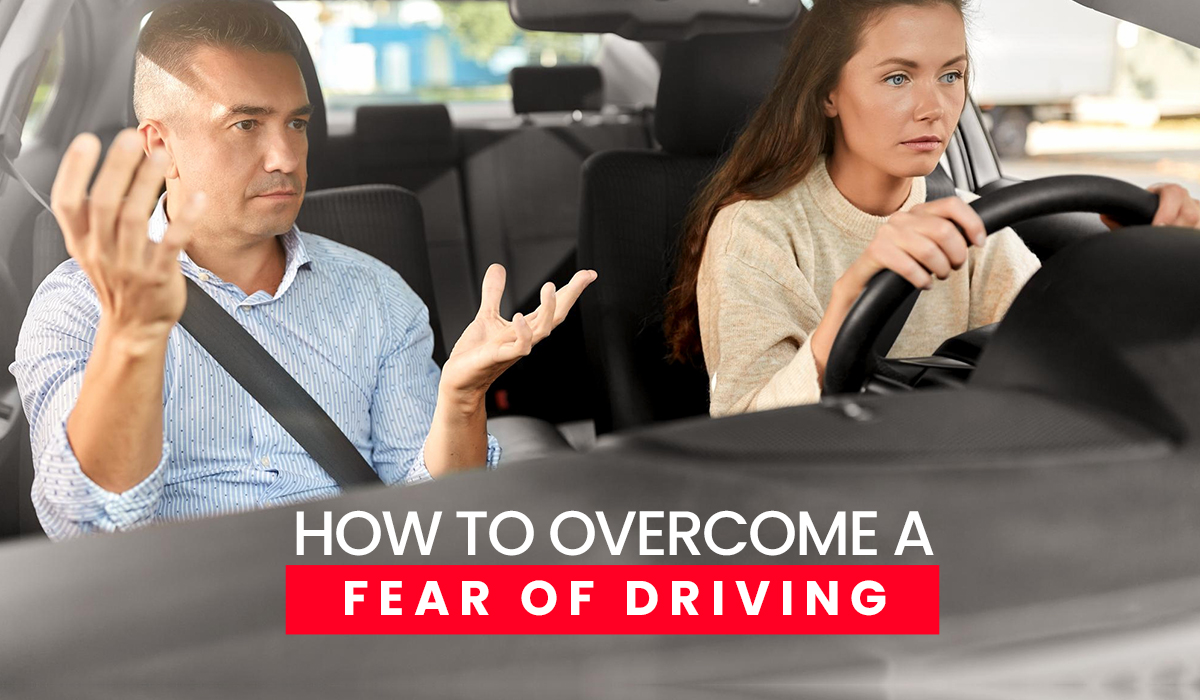
Does the thought of getting behind the wheel send a chill down your spine? Do you make excuses, rely on others, or spend a fortune on taxis just to avoid the road? You are not alone.
A significant chunk of the population, worldwide, experiences some form of driving anxiety. These range from mild discomfort to full-blown driving phobia (vehophobia). This is not just about traffic; it is about a deep-seated fear that robs you of your independence. It limits your opportunities and silently chips away at your confidence.
But here’s the truth: You absolutely can overcome this.
We are not going to sugar-coat it. It won’t be a magic fix. It will require effort. But the payoff? Complete freedom. Unrestricted access to your life. A confidence boost that spills into every other area.
Ready to transform fear into fuel? Let’s dive in.
Understanding Your Fear: What’s Really Going On?
Before you can conquer your fear, you need to understand it. It is not just “being scared.” There is a lot more under the surface.
The Psychology of Driving Phobia:
Your brain is hardwired for survival. It triggers a “fight or flight” response when it perceives danger. For some individuals, driving is inadvertently flagged as a major threat. This can stem from multiple sources:
- Lack of Control: The feeling that you cannot control external variables such as road conditions and other drivers.
- Past Trauma: A previous unfortunate accident, even a minor one, can deeply engrain fear.
- Panic Attacks: The fear of having a panic attack while driving can become a fear itself.
- Anxiety Disorders: Everyday fear, including driving, can be amplified by Generalised Anxiety Disorder (GAD).
- Obsessive Thoughts: Worrying excessively about potential accidents or making mistakes.
- Social Pressure: Feeling inadequate compared to others who drive confidently.
Some Common Triggers You Might Not Realise
It is not always obvious what triggers your fear. Your fear might be triggered by specific situations:
- Bridges or Tunnels: Confined spaces or perceived heights.
- Motorways/Highways: High speeds, heavy traffic, and multiple lanes.
- Bad Weather: Rain, snow, or fog.
- Night Driving: Reduce visibility.
- Being Lost: Fear of unfamiliar routes.
- Bust Intersections: Complex decision-making
Understanding your specific triggers is the first step to dismantling them.
The High Cost of Not Driving (It’s More Than Just Convenience)
Not learning to drive yourself is not just an inconvenience. It carries a significant cost that impacts your life in ways you might not even fully realise. Your freedom score is dropping. Every time you say “no” to an outing because of driving fear, your personal freedom takes a hit.
- Dependence: You rely on public transport schedules, expensive taxis, or the willingness of friends and family. This limits spontaneity.
- Isolation: You are missing out on social events, family gatherings, or new experiences because they are “too far” or “too difficult to get to.
- Lost Time: You lose valuable hours every day because you have to wait for lifts and navigate complex public transport routes. It takes up your time that you could use for productivity.
3 Essential Phases to Overcome Your Fear of Driving
This is not just about cars; rather, it is about controlling your own destiny.
Phase 1: Mental Preparation—Rewire Your Brain for Success
Your journey to driving confidence starts long before you touch a steering wheel. It begins in your mind. Your thoughts are powerful, and negative self-talk creates a cycle of fear. You need to interrupt that cycle.
- Acknowledge, Don’t Suppress: You do not need to suppress your fear by saying “don’t be scared.” Instead, you need to acknowledge the fear and then gently shift your focus. “I feel anxious about driving, but that is okay. I can learn to manage this.”
- Mindfulness: You need to focus on the present moment and on your breath. This helps calm your nervous system, a crucial skill for driving. Simple breathing exercises can make a huge difference. You can inhale for 4, hold for 4, and exhale for 6. Repeat.
- Visualisation: Close your eyes and imagine yourself driving calmly and confidently. You need to feel the steering wheel, see the road, and hear the engine. You can visualise successfully navigating a familiar route. Do this daily.
- Positive Affirmations: You need to replace negative thoughts with positive ones. “I am a capable driver.” “I am calm and focused behind the wheel.” “I am learning and improving every day.”
- Challenge Negative Thoughts: When a thought like “I am going to crash” pops up, ask yourself: Is this 100% true? What is the evidence, and what is a more realistic thought? Often, your brain exaggerates fear.
- Set Tiny Goals: Don’t think about driving across the country. You can think about sitting in the car for 5 minutes. Then 10. Then, start the engine. Small wins build momentum.
Phase 2: Gradual Exposure—Your Step-by-Step Map
You would not jump into a marathon without training, right? The same applies to when learning to drive. Gradual exposure is key to desensitising yourself to the fear.
This is where many people fail. They try to do too much, too soon, and then get discouraged. Take baby steps.
- Sit in the Car (Stationary): You can spend time in the driver’s seat. Just sit there. You should familiarize yourself with the controls. You need to adjust the seat and mirrors. Feel the car. Do this regularly until you feel comfortable.
- Start the Engine: Once comfortable sitting, start the engine. You need to listen to it and feel the vibrations. Turn it off. Repeat. Get used to the sound and feel of the running vehicle.
- Empty Car Park: You need to find a large and empty car park. Practice starting, stopping, turning, and parking. You can practice this with a trusted and calm driver in the passenger seat.
- Quiet Residential Streets: You can slowly progress to very quiet streets with minimal traffic. You need to focus on controlling the car and observing simple road signs.
- Increase Exposure: You can start driving during off-peak hours when traffic is light. You can gradually increase the length of your drives. You can drive on slightly busier roads, gentle turns, and roundabouts one at a time.
- Practice Parking: Parking can be a major anxiety trigger. You can practice in various scenarios in a low-pressure environment.
Remember: Consistency is more important than intensity. Short and regular exposure sessions are better than infrequent, long, and overwhelming ones.
Phase 3: Skill Building & Professional Guidance
Mental preparation and gradual exposure are important, but at some points, you need to leverage expert knowledge to truly accelerate your progress.
Driving is not just about moving a car. It is a complex skill that requires knowledge, awareness, and technique.
- Defensive Driving: You have to learn to anticipate hazards and react safely. You also need to protect yourself from other drivers’ mistakes. This empowers you.
- Advanced Techniques: You need to master manoeuvres and complex junctions while driving. When you understand road positioning while driving, it makes you a more competent driver, which directly translates to confidence.
- Emergency Procedures: In order to mitigate the fear of the unknown, you need to learn how to handle a flat tyre, brake failure, and other unexpected events.
Why a Professional Instructor is Non-Negotiable?
Now you might be asking: Why do you need the help of a professional instructor? The answer lies in learning all the nitty-gritty of driving. An expert instructor has all the practical and theoretical knowledge to make you a confident and competent driver.
- Structured Learning: A professional instructor offers you a structured, progressive learning path customised to your needs. They know exactly how to build skills systematically.
- Specialised Learning: Many instructors are experienced in working with anxious or phobic learners. They understand the psychology of fear and how to gently push you beyond your comfort zone.
- Objective Feedback: Friends or family can try to teach you wholeheartedly, but their knowledge and expertise are confined to their own experience. But an instructor can offer objective and constructive feedback without emotional baggage.
- Dual Controls: This is honestly a game-changer. The driving instructor has their own set of pedals, offering you a safety net. This drastically reduces the fear of making a mistake as they can intervene instantly.
- UK Road Knowledge: Understanding specific road rules, signs, and typical driving conditions is essential for drivers driving in the IUK. An instructor will ensure you are fully prepared for the local environment and the driving test.
- Bust Bad Habits: An instructor can spot and correct any bad habits you might have unknowingly picked up. If ignored, they can contribute to anxiety. Investing in professional driving lessons is not a luxury; it is a strategic investment in your safety. It boosts your confidence and helps you achieve your ultimate freedom.
Real-World Strategies: Handling Obstacles on the Road
Even with thorough practice, panic can strike. Here is how to manage it when you are actually driving.
What you should do when panic strikes-
- Breathe Deeply: You need to inhale through your nose for 4 counts, hold for 4, and exhale through your mouth for counts. This activates your parasympathetic nervous system, calming your body.
- Focus on the Present: Mentally label what you see: red car, green car, or road ahead. This pulls away from anxious thoughts.
- Pull Over Safely (if possible): If you feel overwhelmed, you need to find a safe place to pull over. You can take a few minutes to compose yourself before continuing.
- Grounding Techniques: You should focus on the details: the feel of the steering wheel, the sound of the engine, the texture of your clothes.
Final Though
If you are in the UK and serious about transforming your driving anxiety into driving confidence, we can help. At Drive Professional Driving School, our specialised instructors understand the unique challenges of overcoming driving fear. We provide tailored, supportive, and intensive training designed to build your skills and your self-belief, step by gentle step.
Contact us today, and let’s get you on the road to freedom.
No Responses