
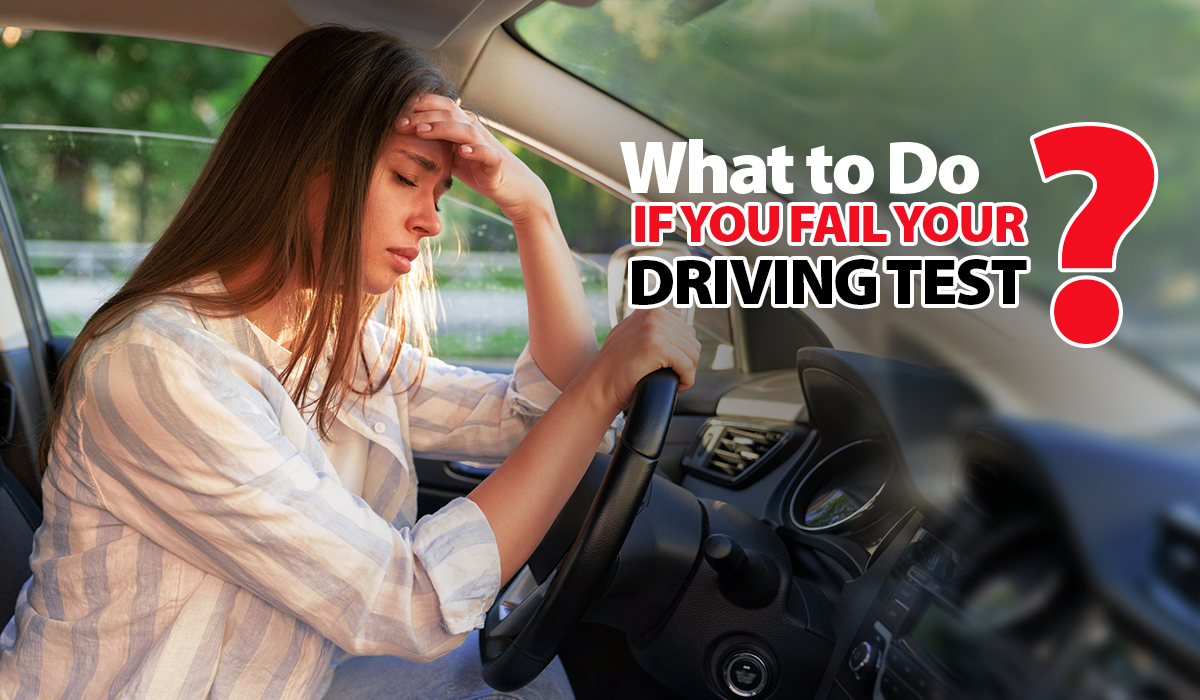
ALRIGHT, let’s get real for a second. You just failed your driving test in Oxford. It stings, right? You feel it is a huge setback and even a pinch of embarrassment. You prepared, you practised, and you visualised that shiny new license in your hand. But it did not go according to your plan. And what you should do is troubling you? That is perfectly okay.
In fact, if you are reading this, you are already ahead of the game. Why? Because you are not wallowing; you are looking for answers. You are ready to turn this setback into a massive comeback.
So, take a deep breath. You are not starting from scratch. You have just completed an invaluable and real-world simulation of what it takes to pass. Ready to learn and unlearn something if you failed the test? Let’s dive in.
Step 1: The Post-Mortem Power Play-Why You Failed
This is not about blaming yourself. This is about critical analysis. Every single Driving Test provides feedback. Your examiner is not just there to judge; they are there to identify areas for improvement. You should not let the feedback slip away. It is gold.
Here is how to extract maximum value from that feedback:
Get the Specifics:
Do not just get stuck on “you failed.” You should ask for the detailed report. What were the exact critical errors? Was it observation or lane positioning? Maybe it is a specific manoeuvre.
Categorise Your Mistakes:
Were there technical errors, for example, incorrect gear changes, not checking the mirror often enough? Were they observational errors, such as failing to spot hazards, not looking far enough ahead? Or were they procedural mistakes, such as not following instructions precisely, exceeding speed limits?
Nervous Breakdown:
Were nerves a factor? You need to be honest with yourself. Did anxiety make you forget something you knew cold? Did tremors or a racing heart impact your smooth control or the vehicle? Nerves can sometimes cause even the most prepared driver to falter.
Common Culprits and How to Spot Them:
- Lack of Observation: Did you forget to check your blind spot before changing lanes? Did you miss a pedestrian at a crossing?
- Poor Control: You might face problems like struggling with clutch control, stalling frequently or jerky steering.
- Maneuve Meltdowns: You could face problems like parallel parking gone wrong, three-point turns chaos, or reversing into a bay like a pinball.
- Traffic Light/Sign Error: If you can run a red, miss a stop sign or misinterpret lane arrows.
- Speed Management: It often happens that you drive too slowly, or worse, exceed the speed limit.
Understanding exactly where things went wrong is your roadmap to success. Without this clear understanding, you are just driving in circles.
Step 2: The Mental Reset—How to Conquer the Emotional Rollercoaster
Failing a driving test can feel like a blow to your confidence. It is totally normal to feel upset, frustrated or even deflated. But here is the thing: dwelling on those emotions will not get you your license. It will just prolong your pain.
You need to focus on how you can bounce back like:
Take a Strategic Break:
You should not rush back into another rebooking. You need to give yourself a day or two to process things. You need to do something unrelated to driving. This is not procrastination, but a mental cleanse.
Reframe Failure as “Feedback”:
This is not a dead end but a detour. Every major success story has moments of failure. Those moments teach you more than seamless wins ever could. You now have practical experience that others do not get until after they pass.
Leverage Your Support System:
You can talk to your friends or family who have been through this. You would be surprised how many successful drivers did not pass on their first try. Their experiences can provide perspective and encouragement.
Visualise Success Specifically:
Do not just visualise passing; you need to visualise overcoming the specific challenges that tripped you up. You need to see yourself executing that perfect parallel park or navigating that tricky roundabout with ease.
Building mental resilience is just as crucial as building road skills. Master your mindset, and you are halfway to mastering the road.
Step 3: The Strategic Rebuild—Turning Weaknesses into Superpowers
Now that you know what went wrong and you have reset your mind, it is time for action. This is where real work and real improvement happen.
Your Action Plan for Determination:
You need to know that targeted practice is key. You need to forget generic driving and focus intensely on the areas identified in your examiner’s feedback. If parallel parking is your downfall, you need to dedicate significant time solely to parallel parking. If observations were lacking, you should practice exaggerated mirror and head checks until it becomes second nature.
Consider Reputed Driving Schools:
This is not the time to cheap out or rely solely on friends or family. While their support is valuable, a professional instructor from a reputable Driving School offers unbiased and expert guidance. They see things you miss. They know the common pitfalls and how to correct them efficiently.
Why is a professional instructor Non-Negotiable?
- Personalised Teaching: They can design lessons specifically around your weak points from the failed driving test in Oxford.
- Objective Feedback: They are trained to spot subtle errors and offer actionable feedback, not just “good job.”
- Mock Test Expertise: Many driving schools provide realistic mock tests that stimulate the actual exam, often with a different instructor to mimic the real test environment.
- Confidence Building: Consistent and positive reinforcement from an expert can dramatically boost your confidence.
- Ser A Rigorous Practice Schedule: Do not just drive on quiet streets. Practice in varied traffic, inclement weather (if safe), and on the actual routes used by your local test centre, if possible. This builds adaptability.
You need to understand that improvement is a process. You need to embrace the learning curve. Each drilled manoeuvre and each expert tip from your instructor brings you closer to that license.
Step 4: Rebooking & Recalibration – Your Next Test is an Opportunity
You have analysed and reset; you have practised. Now, it is time to rebook. But don’t rush. You need to ensure you genuinely feel ready and confident before setting that new date.
Strategic Steps for Rebooking and Prep:
- Timing is Everything: You need to choose a test date that gives you ample time to solidify your skills without feeling rushed or over-practised. You can avoid booking too soon after failing. You need to give yourself at least a few weeks.
- Review Test Routes: While you should be able to drive anywhere, you can familiarise yourself with common test routes in your area can reduce anxiety on the day. Your instructor from one of the local Driving Schools might even offer lessons specifically on these routes.
- Simulate the Real Deal: You can conduct at least one or two full mock tests under realistic conditions. You can ask your instructor or a trusted and experienced driver to act as the examiner. You can mimic the exact length, commands, and even the “silence” that can sometimes be unnerving during the official test.
- Vehicle Check: You need to ensure the vehicle you plan to use for your test is in perfect condition and meets all requirements. A mechanical issue is the last thing you need on test day.
The more you prepare for the experience of the test, not just the skills, the less daunting the actual day will feel.
Step 5: The Final Countdown – Keep Calm and Confident
As your retest approaches, managing your mental state becomes paramount. You have done the work. You have put in the hours. Now, trust your preparation.
Things you should do on the test day:
- A tired mind makes mistakes. You should prioritise sleep the night before.
- You need to eat a light and balanced meal to avoid energy dips or a nervous stomach.
- Rushing adds unnecessary stress. You can get there with plenty of time to spare.
- You need to remind yourself of all the progress you have made. Affirm your ability.
- Deep and conscious breaths can calm your nervous system.
- You need to pay close attention to every instruction your examiner gives. If unsure, politely ask for clarification.
- Everyone makes minor errors. Unless it is a critical safety fault, don’t let a small slip spiral into a bigger one. Stay focused on the present moment.
Remember, this is not just about getting a license. It is about becoming a safe, responsible, and confident driver for life. Each practice session, each challenge overcome, builds character and skill. You are building foundational capabilities that will serve you for decades on the road.
Conclusion
Among the many Driving Schools in Oxford, one school that stands out is Drive Professional Driving School, which is known for its experienced and experienced instructors and quality driving lessons.
At Drive Professional Driving School, we specialise in turning novice drivers into confident road masters. Whether you are trying to pass the driving test at your first attempt or you are giving it a second try, our experienced instructors are here to provide the tailored lessons and strategic guidance you need to ace your exam and become a safe driver for life.
Contact Drive Professional Driving School today and let’s get you that license!
No Responses