
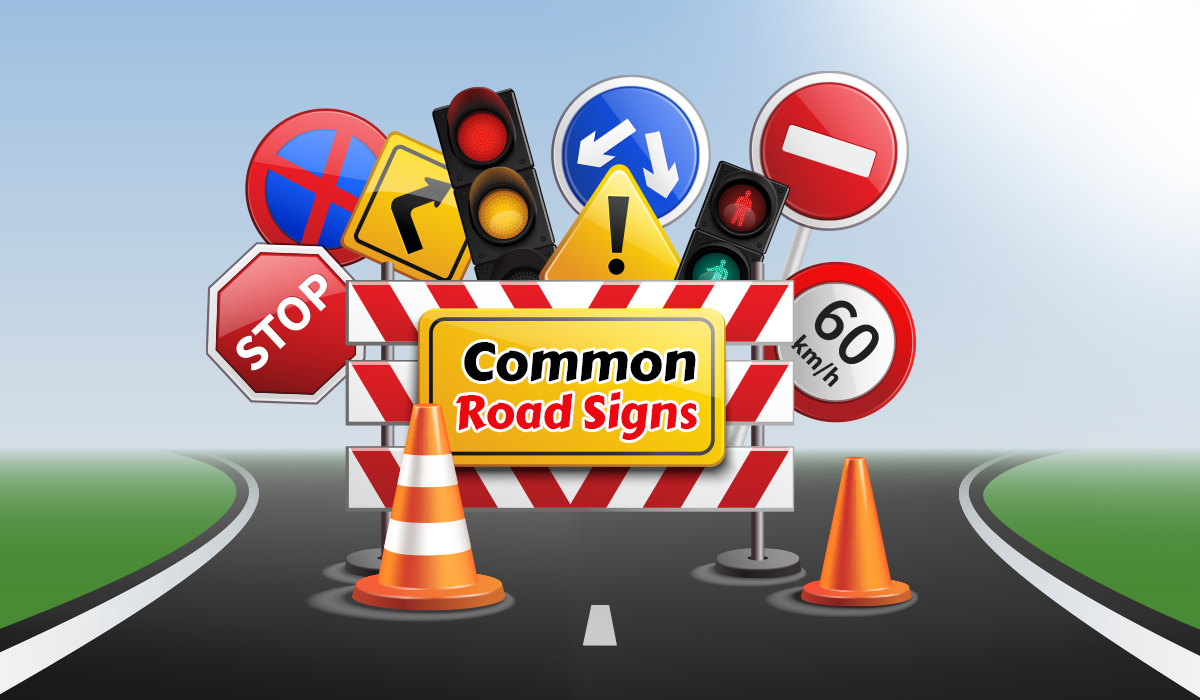
Road Signs are like a universal language that all Learner drivers need to understand. They give us instructions, guide us on our route, and help us anticipate what to expect on the road. Therefore, it is of utmost importance that all drivers learn to drive in Oxford, whether new or experienced, and fully understand the meaning of each traffic sign. The first step in becoming familiar with them is to observe their shape and color. These characteristics reveal a great deal about the type of information conveyed. They allow you to instantly determine which category a sign belongs to and what type of action it implies.
This guide reminds you of the meaning of the most common signs you’ll encounter on the road, and also lists those you see less frequently. If you’re ever unsure, just take a look to avoid making a mistake!
Understanding Traffic Signs
In this modern world, driving has become an essential part of daily life. But before getting behind the wheel, it’s necessary to understand traffic signs. They are the alphabet of the road, a universal language that guides drivers and maintains order on streets and highways. Understanding these signs is crucial for everyone’s safety on the road.
Traffic signs are divided into several categories, each with a specific purpose. Some of the most common signs found on roads include regulatory signs, warning signs, information signs, and others. Each sign has a specific shape and color to convey a clear and direct message to drivers.
- Regulatory Signs: These signs are usually round or rectangular and are used to indicate rules that must be followed, such as speed limits, no-turns, and others.
- Warning Signs: These signs are usually yellow and diamond-shaped. They alert drivers to potential hazards or changes in road conditions ahead.
- Information Signs: These signs are generally rectangular and provide useful information, such as directions to nearby destinations, points of interest, available services, and more.
Understanding these signs and what they represent is the first step to becoming a safe and responsible driver. Remember, road safety is a shared responsibility. So, the next time you hit the road, make sure you understand and respect all traffic signs.
Interpretation Of Traffic Signs
Understanding traffic signs correctly is fundamental to road safety. Traffic signs are a universal language that all drivers should know and respect. They are designed to ensure smooth traffic flow and prevent accidents. But what exactly do these signs mean? How can we interpret them correctly?
Let’s start with the basics. Traffic signs can be divided into three main categories: regulatory signs, warning signs, and informational signs. Regulatory signs, as the name suggests, regulate traffic. They include signs such as “Stop,” “No Right Turn,” and others. Ignoring these signs can result in heavy fines and, more importantly, can put people’s lives at risk.
Warning signs, on the other hand, alert drivers to potentially dangerous conditions ahead. They may indicate the proximity of a sharp curve, a school zone, or the presence of animals on the road, for example. Information signs, meanwhile, provide useful guidance, such as directions to nearby destinations or the distance to the next town.
Understanding the meaning of these signs is only half the battle. It’s equally important to know how to react to them. For example, when you see a “Stop” sign, you should come to a complete stop before the intersection and only proceed when it is safe to do so. Similarly, a “Sharp right turn” sign means you should slow down and prepare to turn right.
Meaning of the shapes in traffic signs
The shapes of traffic signs are fundamental elements for understanding the messages they convey. Each shape has a specific meaning, which helps drivers make quick and safe decisions on the road. Let’s explore some of the most common shapes:
- Octagon: This is the shape of a stop sign. When you see an octagonal traffic sign, you must come to a complete stop before proceeding.
- Circular: These traffic signs typically indicate prohibitions, such as speed limits or a ban on turning in a particular direction.
- Square or rectangle: These shapes are used for information signs, such as directions or points of interest.
- Inverted triangle: This sign is used to warn drivers of hazards ahead, such as sharp curves or intersections.
- Diamond: Diamond-shaped traffic signs are used to warn of potentially dangerous road conditions, such as the presence of wildlife or slippery road conditions.
Understanding the meaning of the shapes in traffic signs is crucial for safe road navigation. They provide important information that can help prevent accidents and improve traffic flow. So, the next time you’re on the road, pay attention to the shapes of the traffic signs and remember what they mean!
Consequences Of Ignoring Traffic Signs
Ignoring traffic signs can have serious and potentially fatal consequences. Drivers face not only fines or penalties, but also the risk of accidents that can result in property damage, serious injuries, and even loss of life. Fines for ignoring traffic signals can vary depending on the severity of the infraction. For example, running a red light can result in a significant fine. Additionally, points can be added to a driver’s license, which can lead to license suspension if too many points are accumulated.
Regarding accidents, statistics show that a large percentage of traffic accidents are caused by drivers who do not obey traffic signals. These accidents can range from minor collisions to fatal accidents.
Traffic Signs And Road Safety
Obeying traffic signs is crucial for road safety and accident prevention. They are designed to provide essential guidance and information to drivers, ensuring a smooth and safe flow of traffic. Ignoring them can lead to dangerous situations and even fatal accidents.
Consider traffic signs as a universal language that all drivers must learn and respect. For example, a stop sign is not just a suggestion- it’s a direct instruction to stop completely. Similarly, a speed limit sign is not a simple recommendation, but a rule set to ensure the safety of everyone on the road.
Respecting traffic signs not only keeps you safe but also protects other drivers, pedestrians, and cyclists. So, if you are joining driving lessons in Oxford at Drive Professional Driving School, get in touch with us. Remember, the road is a shared space, and everyone has a responsibility to make it safe. So, the next time you’re on the road, remember that every traffic sign has a purpose and is fundamental to road safety.
No Responses